

Article: Restaurant Lighting's Dirty Secret; Most of it was never built for hospitality.


Restaurant Lighting's Dirty Secret; Most of it was never built for hospitality.
A note on what we keep finding inside the lighting industry, and why most operators stopped trusting it.
There is a conversation happening on most restaurant floors at half past seven in the evening that nobody is writing down.
It is the conversation between a server and a table where the lamp has died. Or the lamp is too bright. Or the cable is showing. Or the lamp has been moved to a side table because a four-top became a six. Or the candle is flickering against the wine list. Or the host is apologising for something they cannot quite articulate, because the table simply does not feel right.
Most operators have stopped expecting better. Lighting is one of those line items you inherit. From the previous owner. From the designer. From the supplier your colleague used at her last venue. You inherit it, you live with it, and you stop noticing how often you have to work around it.
We have spent the last few years inside that working-around. And here is what we keep finding.
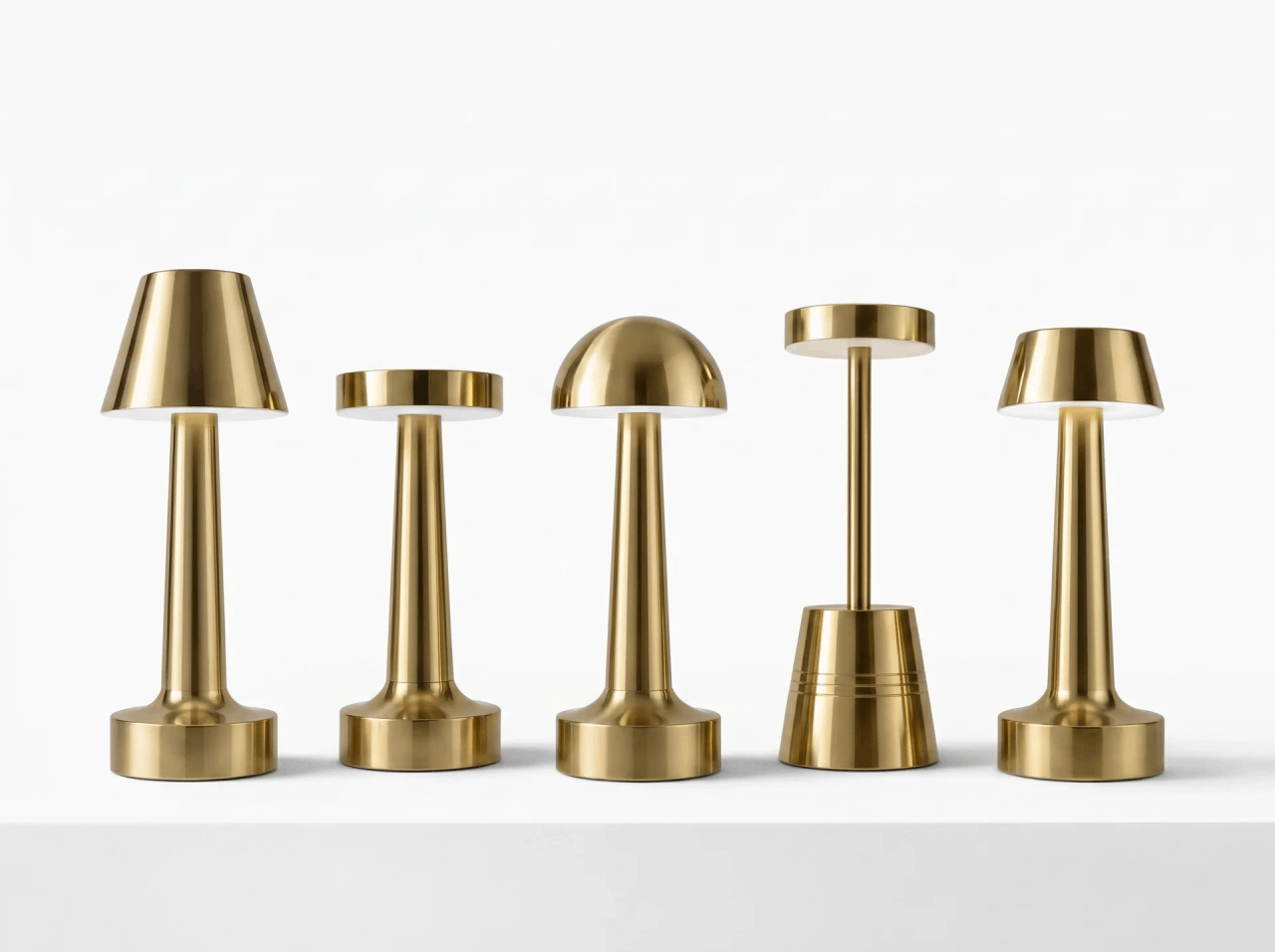
Most cordless table lamps were not designed for hospitality.
Not in their batteries. Not in their build. Not in their light spectrum, their charging logistics, their on-off behaviour, or their ability to survive a Saturday service with eighty covers and an open kitchen.
They were designed for somebody's living room.
And then, somewhere around 2018, when premium hospitality started looking for a way out of the cable problem, those lamps got picked up off a wholesale catalogue, repackaged, and sold into venues that needed an entirely different object.
That is the dirty secret. Not that bad lamps exist. Bad lamps will always exist. The secret is that the cordless lighting industry never built for the operator in the first place. It built for the showroom. It built for the design fair. It built for the interior magazine spread.
And then it sold that lamp to your floor manager.
What hospitality lighting actually has to do
Walk a service. Any service.
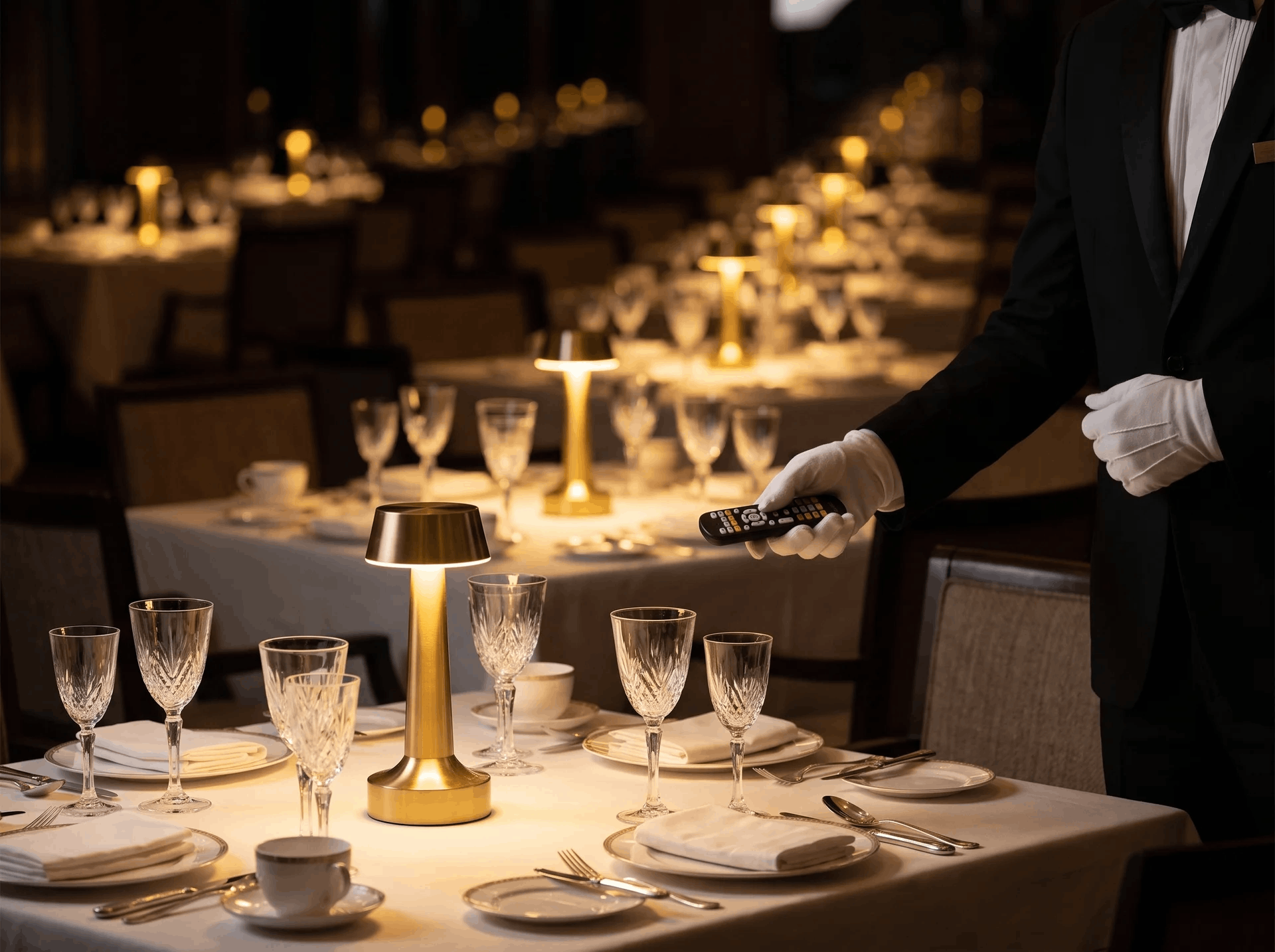
A lamp on a hospitality table is being asked to do five things at once that almost no other lamp on earth is asked to do.
It needs to last a full service. Aperitif at six, last digestif at one. Seven hours of continuous use, every single night, with no opportunity to swap mid-shift without disrupting a guest.
It needs to survive a moving floor. A four-top becomes a six. A six becomes a private dining setup. A terrace gets restructured for an event. The lamp gets picked up, put down, picked up, put down. Forty times a week. By people who are not paid to handle it like a museum piece.
It needs to render food the way it was plated. A 95 CRI render, ideally 2700K, ideally consistent across every lamp on every table. Because if your lamps render warm and your kitchen plates for daylight, the dish is wrong before the guest takes a bite.
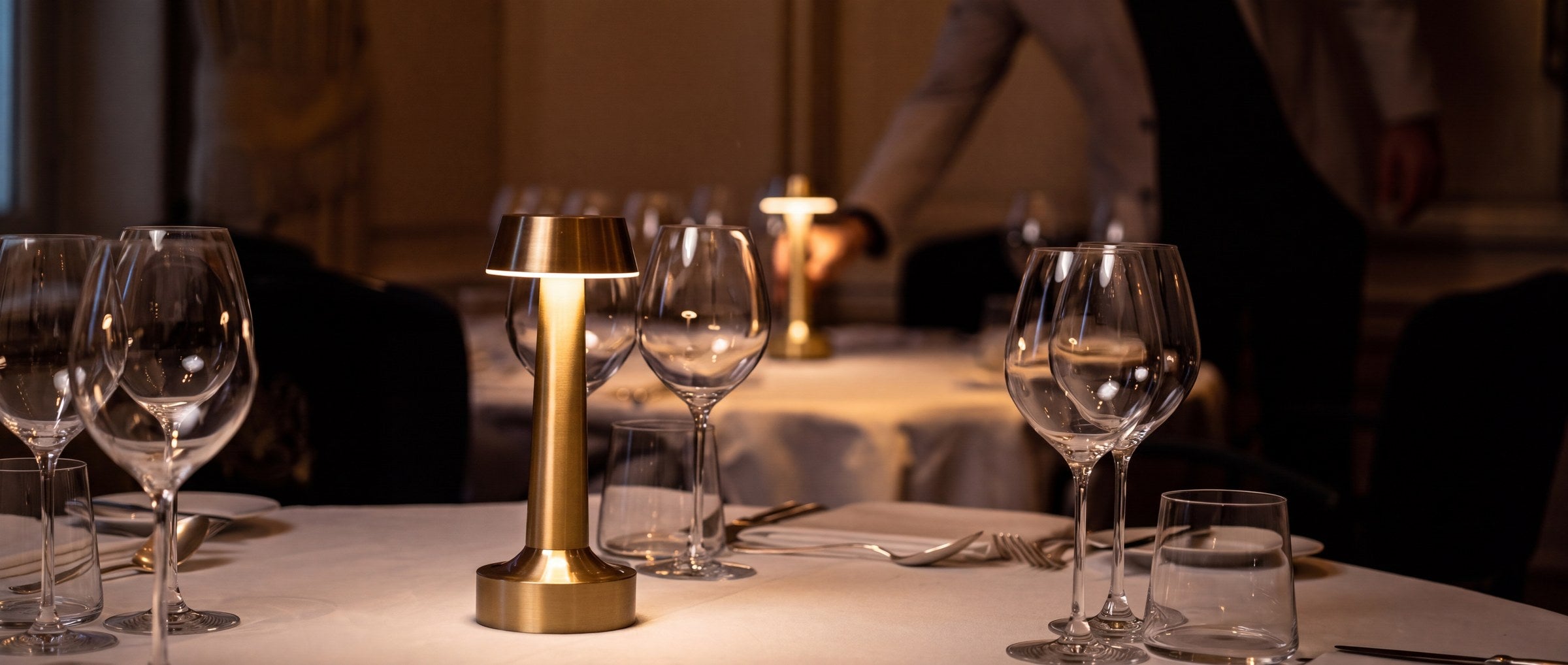
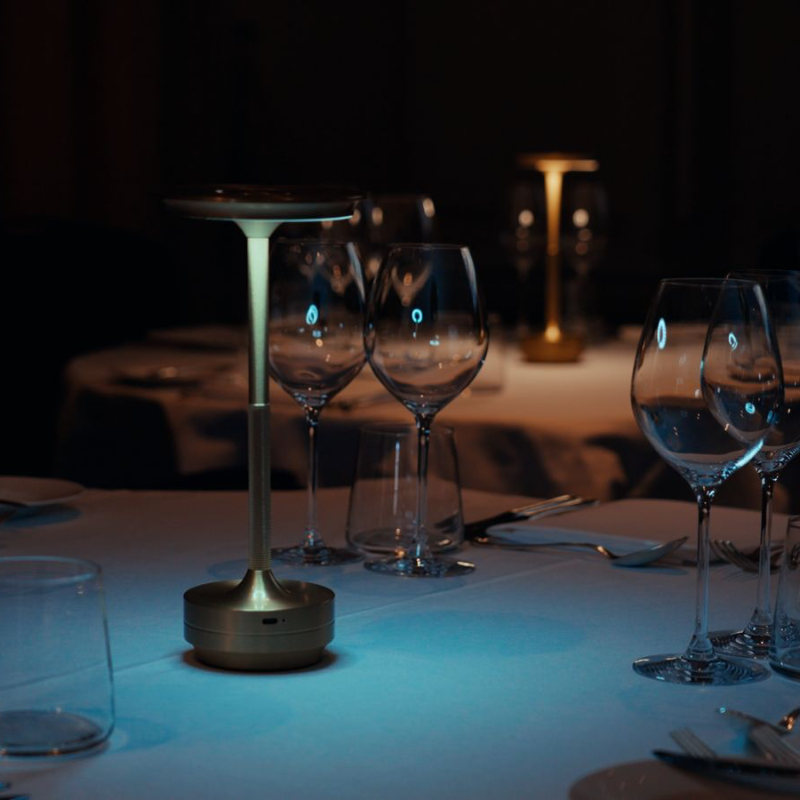
It needs to disappear. No clicking on. No clicking off. No dimming wheel that catches a server's apron. No charging cable visible from the booth. The lamp's job is to make atmosphere. The lamp's job is not to be noticed.
It needs to come back tomorrow. And the day after. And the day after that. For at least three years. Without becoming the thing the floor manager has to think about on a Wednesday morning.
That is the spec. That is what an operator silently hopes for when they put a cordless lamp on a table.
Almost nothing on the market meets it.
Where the problem actually starts
It starts in the brief.
Most cordless lamps that end up on hospitality tables were specified for a different room entirely. The brief said bedside table. The brief said coffee corner in a hotel lobby. The brief said outdoor garden for two evenings of summer use.
That brief produced lamps that do exactly what the brief asked for. Three to five hours of light. Casual handling. Decorative finishes that look beautiful in a photograph and chip the moment they are passed across a service station.
Then the trade picked them up.
Suppliers saw an opportunity. Hospitality wants cordless. Cordless is hot. Let's repackage what we already make and sell it into restaurants.
So they put the same lamp in a different colour. Wrote a B2B price list. Added the word contract-grade to the marketing copy. Photographed it on a linen-clothed table next to a glass of natural wine.
Nothing changed inside the lamp.
The battery is still the battery. The charging cycle is still the charging cycle. The build is still the build that was tested for somebody's bedroom.
That is what an operator is buying when they buy most cordless table lamps. They are buying a living-room object with a hospitality-shaped marketing wrapper.
Why operators stopped trusting it
Because they have been burned.
Most operators we speak to have already bought cordless lamps. Not once. Three times. Four times.
They bought a batch in 2022 because the design felt right and the price felt manageable. Half of them died inside a year. They bought a different brand in 2023, because the new one had better battery numbers on the spec sheet. Those flickered after six months. They tried a third in 2024, and that one looked exactly like the second one, because all three came out of the same Shenzhen factory.
By the time we walk into the conversation, most operators are not asking which lamp. They are asking can lamps actually be trusted at all.
That is a brand crisis the cordless lighting industry created entirely on its own. Not by lying. By selling the wrong object to the wrong room, and pretending it was made for the room all along.
What we built instead
We built one lamp.
We did not build a range. We did not build a seasonal collection. We did not put our name on a catalogue of finishes and let the buyer choose. We built one lamp, and we built it for one room.
The room is the dining room of a venue that takes its atmosphere seriously.
That meant the brief had to come from operators, not from a designer's sketchbook. So we spent two years on floors. Watching how lamps got moved. Watching how often batteries died at the wrong moment. Watching what made a server pick up a lamp and walk it backstage in the middle of a service. Watching what made a guest squint, or pull out their phone for the menu, or move the lamp themselves.
That brief produced a list of constraints we accepted before we accepted anything else.
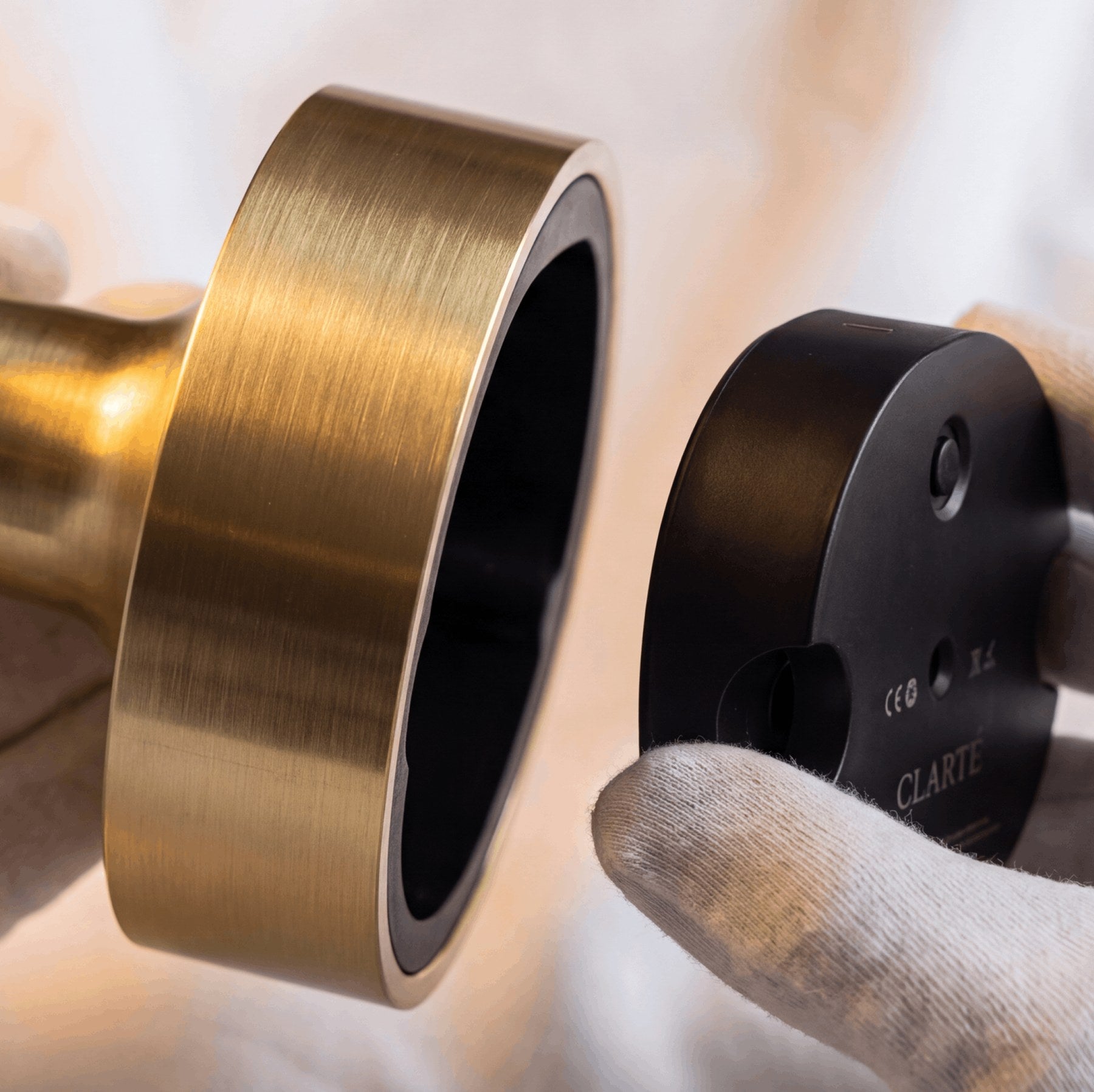
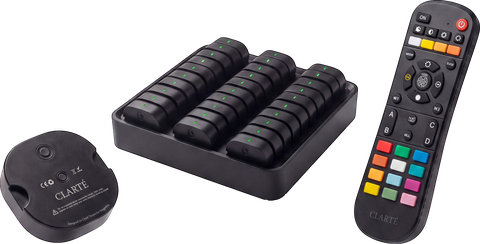
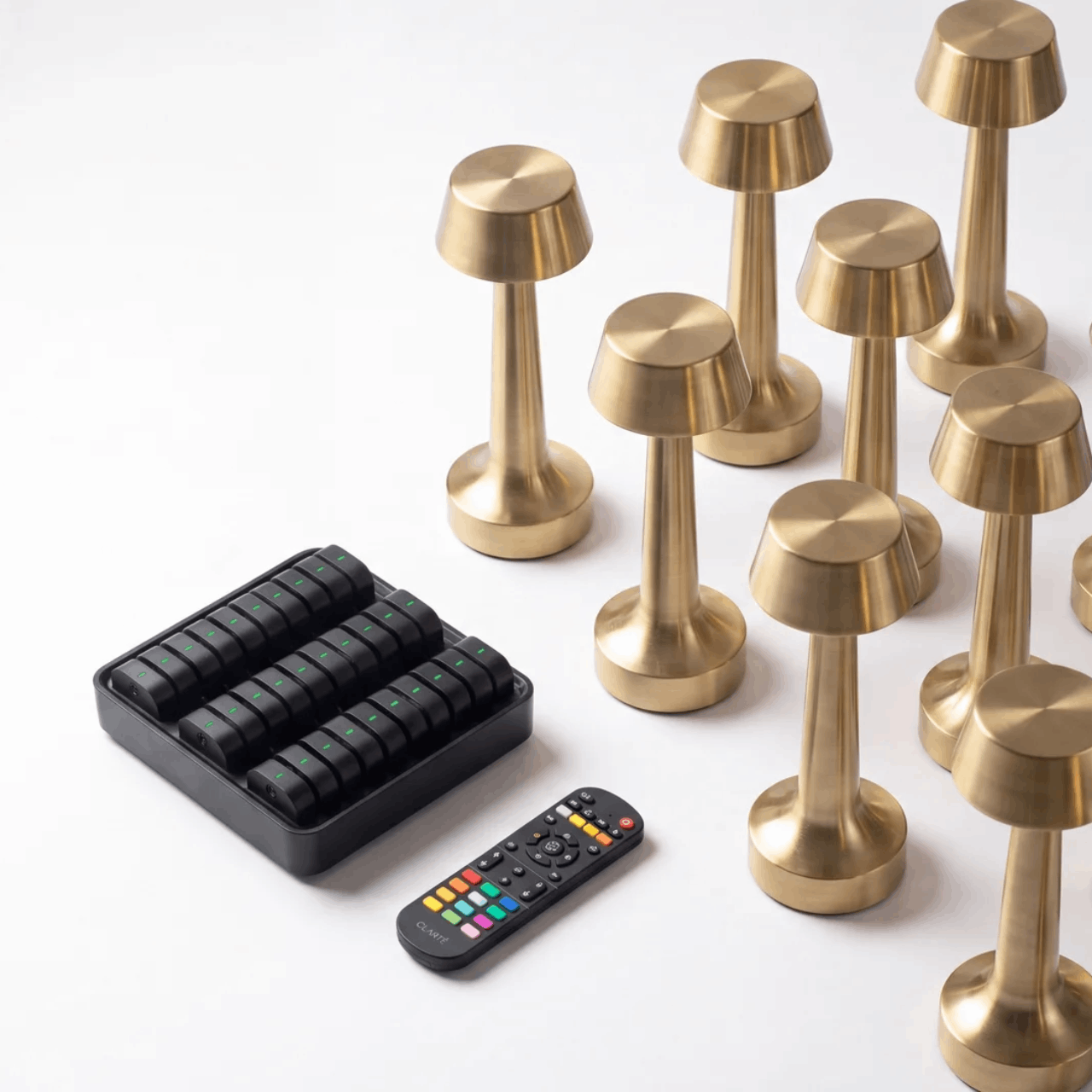
We do not ship a lamp that has not run 1,500 cycles in test. We do not ship a lamp that drops below 2700K in the last hour of charge. We do not ship a lamp without a charging base that holds six and lives backstage. We do not ship a lamp that was finished in any factory other than the one we visit four times a year.
And we do not ship into retail. Hospitality is the room. Hospitality is the only room.
That is the constraint. The constraint is the moat.
A competitor can copy the silhouette. A competitor cannot copy the decision to refuse retail, to refuse seasonal collections, to refuse a battery test cycle that costs us three weeks per shipment. Those refusals are the product.
What this means for your floor
We are not going to tell you to switch suppliers.
Operators have been told to switch suppliers more times than they have been told the truth. We do not need to add to that list.
What we will say is this. The next time a lamp dies on table six during a Saturday service, the question is not is this a bad lamp. The question is was this lamp ever supposed to be on a hospitality table in the first place.
For most cordless lamps in most premium venues right now, the honest answer is no.
That is the dirty secret. The industry has been selling living-room objects into dining rooms for almost a decade, and the dining rooms paid for the mistake.
If you have stopped trusting cordless lighting, that is the correct response to the evidence in front of you.
If you have started looking for something that was actually built for the room you run, that is the conversation we have been waiting for.
Clarté builds cordless table lamps for hospitality. We do not sell to retail. We do not sell to home-décor catalogues. The lamp on your table is the only lamp we make, and the only lamp we will ever make. If you would like to see what one runs like across a full service, write to us at info@clartelights.com.
TL;DR
Most cordless table lamps were never built for hospitality. They were designed for living rooms, repackaged for the trade, and sold into restaurants that needed an entirely different object. The spec a hospitality lamp has to meet — a full service, a moving floor, food rendering, visual silence, and a three-year lifespan — was almost never written into the brief. That is the dirty secret. We built one lamp for one room. The constraints are the moat.

Written by Clarté Lamps